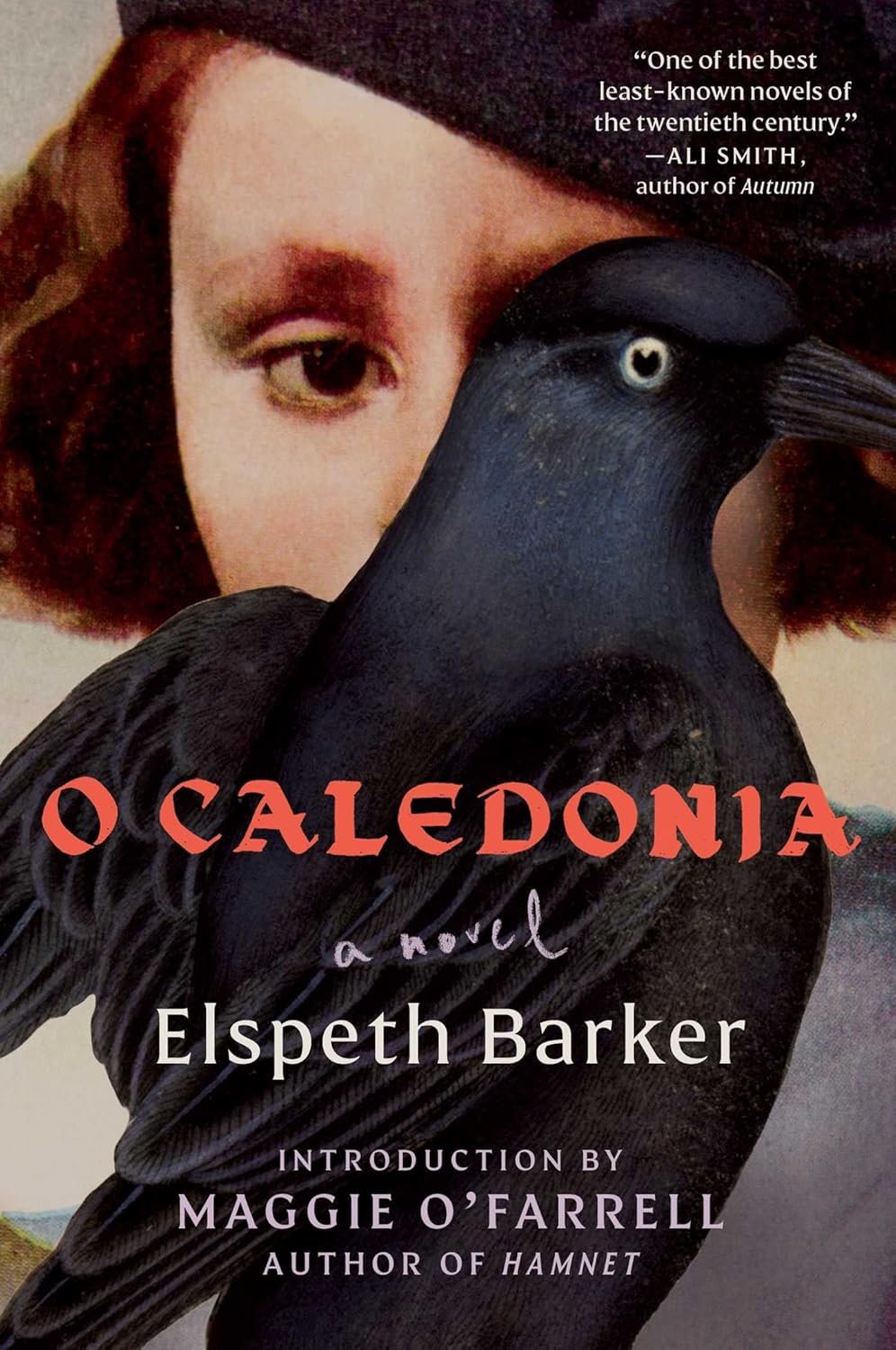
O Caledonia by Elspeth Barker (NCN Book Club Selection May)
As you know, I dislike coming of age (COA) novels, and here’s why–they are uniformly grim.
In British COA stories, there are several reliable clichés–the nasty nanny, a foreboding boarding school, clueless (or cruel) parents, horrible siblings, and the fish out of water protagonist who suffers some traumatic event that reverberates through his/her entire life. In the American version, the “nanny” is an older classmate (“a bad influence”), and the school is a vast, bland complex deep in suburbia or the sticks.
I get that being a teenager is challenging, but surely there are some teenagers who lived ordinary young lives or even a few who excelled– the class prefect, the athlete, the student council president? Why doesn’t anyone write about these teenagers?
Because the vast majority of teenagers have uneventful lives and tedious conversation. (Check their text messages!) But the misfits—now here is scope for a novel!
Despite my distrust of the genre, I enjoyed two COA novels this month, which proves the joy of reading—you never know!
O Caledonia (© 1991) is a classic British COA novel but despite having all the above-mentioned clichés, it is an excellent read.
The novel opens with the murder of the sixteen-year-old misfit protagonist, Janet, of Castle Auchnasaugh. (Tragic, but at least the reader doesn’t spend the rest of the novel wondering how she survives adulthood bearing the guilt/burden/shame of some youthful transgression, perceived or otherwise.) Also tidily, it is revealed that her killer was “consigned to a place of safety for the rest of his days.”
With that out of the way, Barker introduces the short life of Janet and the corresponding COA clichés:
- Home: Castle Scotland
- Nanny: Calvinist
- Siblings: Perfect or Male
- Parents: Critical
- Boarding School: Cold
- Traumatic Event: So Many!
Why on earth did I like this book? Janet, while irritating, is a compelling often sympathetic character. She is generally misunderstood but bravely stands up for herself. The writing is subtle, precise, and evocative. The book is darkly funny and slyly spoofs several literary genres– the Gothic Novel, Scottish poetry, and the whodunnit.
We had a spirited discussion about this novel at book club. Different but a worthwhile read.
#2-How to Commit a Postcolonial Murder by Nina McConigley